.png)
Why National Honor Guard Standards Matter

Honor Guard ceremonies are often measured in minutes, but the meaning they carry can last a lifetime.
A funeral detail, memorial service, flag presentation, or final salute may be remembered by a family for decades. Public ceremonies and community events can also shape how an agency, profession, or nation is represented before thousands of people. In those moments, every movement communicates something.
Precision communicates preparation. Coordination communicates unity. Professionalism communicates respect.
National Honor Guard standards matter because the importance of the ceremony should not depend on the size, location, funding, or experience level of the team performing it.
A Shared Responsibility Without a Shared Framework
Across the United States, Honor Guards serve in law enforcement, fire service, emergency medical services, corrections, military veteran organizations, and other public safety communities. These teams often perform comparable ceremonial responsibilities, yet the methods they use can vary considerably.
Some Honor Guards are supported by formal agency policies, experienced commanders, established training programs, and sufficient equipment. Others are created by a small group of dedicated personnel who must build a program with limited resources and little written guidance.
In many cases, Honor Guard knowledge is passed down informally from one member to another. That knowledge may be valuable, but an entirely informal system can also allow inconsistent movements, outdated practices, avoidable safety concerns, and procedural misunderstandings to continue.
The absence of a broadly recognized national framework means that teams are frequently required to develop their own answers to questions that Honor Guards throughout the country are already confronting.
National standards can provide a reliable starting point.
Consistency Protects the Dignity of the Ceremony
Consistency is not about making every Honor Guard identical. Agencies, disciplines, regions, and communities have traditions that should be preserved. A fire service funeral may include customs that differ from those of law enforcement, emergency medical services, corrections, or the military.
Standards should respect those distinctions while establishing common expectations for the elements that benefit from uniformity.
Basic movements, formations, commands, flag protocols, equipment positions, ceremonial transitions, and safety practices should not change unnecessarily from one jurisdiction to another. Greater consistency allows Honor Guard members to perform with confidence and helps ensure that the ceremony remains focused on the person, family, or purpose being honored.
The public may not recognize every technical detail, but people can see when a team is coordinated, disciplined, and prepared. They can also recognize uncertainty, conflicting movements, or visible confusion.
A national standard helps reduce that uncertainty.
From a distance, Honor Guards serving on opposite sides of the country should demonstrate the same fundamental qualities: dignity, discipline, precision, and respect.
Standards Strengthen Multi-Agency Operations
Many ceremonies require personnel from more than one agency or jurisdiction. A large line-of-duty death funeral, regional memorial, mass-casualty remembrance, sporting event, or statewide ceremony may bring together Honor Guard members who have never trained or performed together.
Without shared terminology and common operating methods, even highly skilled members may struggle to function as a unified team.
Differences in commands, marching techniques, formations, flag-handling procedures, equipment positions, or ceremonial sequences can create confusion during an event where mistakes carry significant emotional and public consequences.
National standards improve interoperability by establishing a common professional language. Members from different organizations can arrive with a clearer understanding of expected movements, positions, commands, and responsibilities.
This does not eliminate the need for rehearsals or event-specific planning. It makes those rehearsals more productive because the participants are beginning from a shared foundation.
Standards Improve Training
A written national framework gives Honor Guard leaders and instructors a defined body of knowledge around which training can be organized.
Rather than relying solely on local custom or individual preference, instructors can teach movements and procedures that have been reviewed, documented, illustrated, and connected to recognized sources. New teams can use the standards to establish their programs, while experienced teams can compare current practices against broader professional guidance.
Clear standards also support more objective evaluation. Members can be assessed according to published expectations rather than the personal preferences of an individual instructor or team leader.
This creates a stronger environment for professional development, instructor credentialing, continuing education, and organizational accountability.
Standards do not replace experienced instruction. They strengthen it by giving instructors and students a consistent reference.
Standards Preserve Institutional Knowledge
Honor Guard programs frequently depend on a small number of experienced members. When those members retire, transfer, leave the agency, or become unavailable, years of ceremonial knowledge may leave with them.
Written standards and doctrine help preserve that knowledge.
They create continuity between generations of Honor Guard members and reduce the need for every new leader to rebuild a program from the beginning. Diagrams, command sequences, equipment guidance, ceremony outlines, and recommended best practices can capture lessons that might otherwise be lost.
Preserving knowledge is especially important in specialized ceremonial work, where some procedures may be performed infrequently but must still be conducted correctly when the need arises.
A team may go months or years without participating in a line-of-duty death funeral. When that call comes, it cannot afford to begin researching its responsibilities from scratch.
Standards Promote Safety
Honor Guard work is ceremonial, but it is not without risk.
Members may handle rifles, axes, pikes, swords, sabers, flags, caskets, ladders, apparatus, and other specialized equipment. They may operate in adverse weather, near traffic, on uneven terrain, around aircraft or emergency vehicles, and during ceremonies involving large crowds.
Fatigue, emotional stress, prolonged standing, extreme temperatures, and compressed preparation timelines can create additional hazards.
National standards can help identify appropriate equipment-handling methods, staffing considerations, rehearsal expectations, physical safety practices, and risk-management measures. Safety guidance is especially important when multiple agencies are operating together or when members are asked to perform an unfamiliar ceremonial function.
Safety and dignity are not competing priorities. A well-designed standard protects both.
Standards Create a Basis for Best Practices
Not every aspect of Honor Guard service should be governed by a rigid rule. Ceremonies must often be adapted to the wishes of a family, the traditions of an agency, the physical environment, available personnel, or the circumstances of the event.
For that reason, national guidance should distinguish between core standards and recommended best practices.
A standard establishes a consistent expectation where uniformity is important. A best practice provides a professionally supported method that may be adapted when circumstances require a different approach.
Both are necessary.
Standards create consistency. Best practices provide informed flexibility. Together, they help teams make sound decisions without treating personal preference as established doctrine.
Alignment With Recognized Authorities
Public safety Honor Guards have historically drawn heavily from United States military drill and ceremonies traditions. That connection should be acknowledged and preserved where appropriate.
Where applicable, national Honor Guard standards should reference current United States military manuals, Department of Defense instructions, federal guidance, established flag protocols, and other authoritative materials. Doing so helps identify where public safety practices align with recognized military methods and where adaptation is necessary because the mission, personnel, equipment, or ceremonial environment is different.
Referencing authoritative sources also provides transparency. Teams should be able to understand not only what a recommended practice is, but why it was selected and where it originated.
The goal is not to copy military doctrine without analysis. It is to respect its influence, retain applicable methods, and thoughtfully address the distinct needs of public safety Honor Guards.
Guidance, Not Government Regulation
National Honor Guard standards should be credible, carefully developed, and professionally reviewed. They should not be presented as governmental regulations or as a substitute for an agency’s lawful authority.
Individual agencies remain responsible for their own policies, procedures, personnel, legal requirements, and operational decisions. A national standard provides guidance that an organization can evaluate and adopt, either in full or in part, based on its mission and circumstances.
This distinction is important. The value of a standard should come from the quality of its development, the expertise behind it, and its usefulness to the Honor Guard community—not from a claim of regulatory power.
The National Honor Guard Society’s role is to convene knowledgeable practitioners, study authoritative sources, document sound practices, and publish guidance that Honor Guards can trust.
The Standard Reflects the Importance of the Mission
National standards are ultimately about more than uniform movements or technical precision.
They are about ensuring that a grieving family receives the same level of care whether a ceremony is conducted by a large metropolitan department or a small rural agency.
They are about helping Honor Guard members prepare for responsibilities that may arise with little warning. They are about allowing different agencies and disciplines to stand together as one coordinated body.
Most importantly, they are about demonstrating that every life, every sacrifice, every flag, and every ceremony entrusted to an Honor Guard deserves deliberate preparation and uncompromising dignity.
That is why national Honor Guard standards matter.
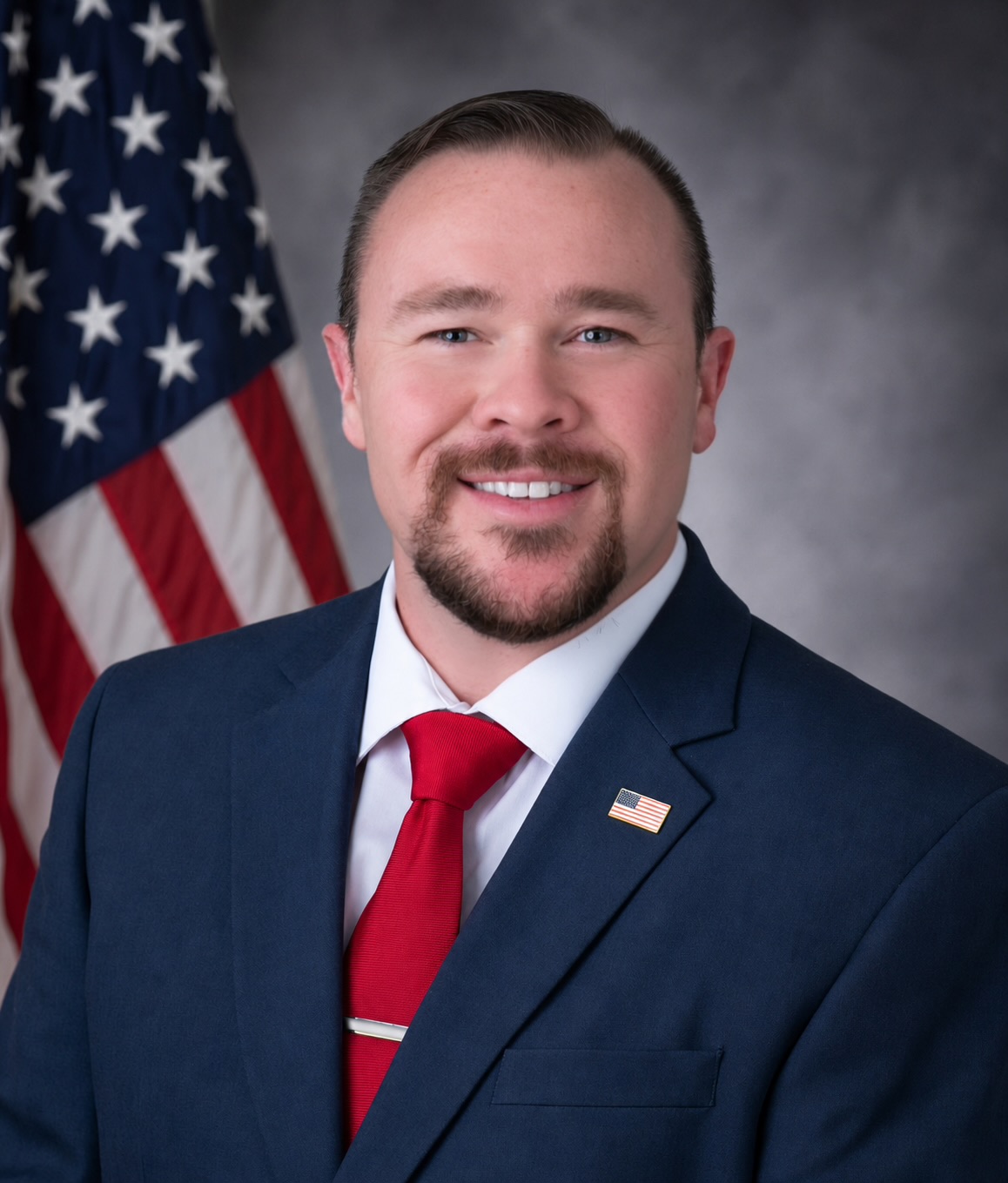
- Bill Owen
Founder & Chair, National Honor Guard Society


Comments