.png)
Why I Stood at the National EMS Memorial
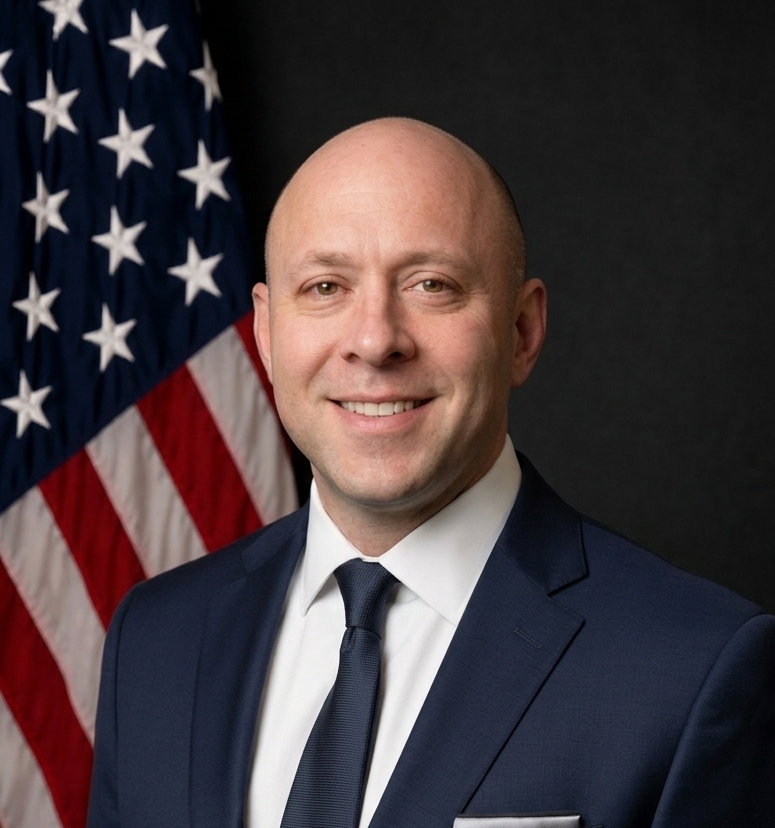

A corrections officer's reflection on camaraderie, shared tradition, and the single-service fallacy in honor guard service.
By Mack House · Board Secretary, National Honor Guard Society
I did not attend the National EMS Memorial because anyone from my agency was being honored. I attended because the fallen deserve to be honored, and because I have come to believe that the work of rendering honors belongs to all of us who serve — not to one discipline, one agency, or one patch.
When I introduced myself and mentioned my correctional background alongside the National Honor Guard Society, the reception told me something I have felt for a long time but rarely seen named. It is rare to see a corrections officer at an EMS memorial. It is just as rare to see an EMS provider at a corrections officer's memorial. When it happens, purely in the spirit of mission support, people notice — and they are moved by it.
That reaction is worth sitting with, because it points to a quiet assumption that runs through much of our profession. Call it the single-service fallacy: the belief that honor guard service is properly bounded by the discipline you come from. That corrections honors belong at corrections funerals, fire honors at fire funerals, and everyone stays inside their own lines. It is an understandable habit. It is also mistaken.
The ceremony is the same because the loss is the same
Stand at enough of these events and something becomes clear. Despite originating in very different institutional worlds, the memorials look strikingly alike. The drill and ceremony, the cadence, the manual of arms, the folded flag, the silence that lands the same way in every room — the structure is nearly identical from one discipline to the next.
That is not a coincidence. It reflects a shared ceremonial lineage, most of it descended from military tradition, and it reflects a truth that does not care what uniform you wear: a line-of-duty death is a line-of-duty death. The obligation to render honors with dignity and precision is universal. The people who carry it out are far more alike than the organizational charts would suggest.
If the discipline of rendering honors is shared, then the walls we put up between disciplines cost us something. They cost us the chance to learn from one another.
What I saw beyond the ceremony
What stayed with me most was not the precision on the memorial grounds. It was the infrastructure of care surrounding it.
These organizations do far more than execute a ceremony. They stay in communication with families, members, and honorary family from beginning to end. They arrange transportation from the airport and to the memorial site. They create an honored arrival for the families who travel to be there. They set aside dedicated spaces, activities, and support for the children of the fallen while staff and volunteers carry out the mission around them. It is a remarkable, deeply human effort, and it is built around a single idea: that the family's experience matters as much as the ceremony itself.
Seeing it done well, in a discipline that was not my own, gave me a clearer picture of what excellent honor guard support can look like — and of how much every discipline stands to gain by paying attention to the others.
What showing up actually says
This is where I believe the National Honor Guard Society has something real to offer. Not by directing anyone. By showing up.
When someone crosses agency lines to honor the fallen — a corrections officer at an EMS memorial, an EMS provider at a police funeral — the absence of the usual silos becomes the message. It says that public safety solidarity is not a slogan. It says that we recognize one another's sacrifice as our own. As the Society grows, I want us to keep showing up in exactly that spirit: supporting these events in whatever capacity is useful, learning how each community honors its fallen, and carrying the best of what we see back to the broader honor guard community.
We are still building, and I would not pretend otherwise. The Society is early in its work. But the foundation we are laying is a simple one, and this experience confirmed it for me: keep our footprint open to the broader public safety community rather than locked behind organizational walls, and keep standing shoulder to shoulder with anyone who shows up to honor the fallen.
The single-service fallacy tells us to stay in our lane. Every memorial I have stood at tells me the opposite. The honors we render are larger than any one of us — and they are strongest when we render them together.
______________________________________________________________________________________
The National Honor Guard Society is a professional and educational organization being built to strengthen honor guard service across disciplines. Standards, model policies, and recommended practices published by the Society are educational and professional resources. They do not replace applicable law, agency policy, collective bargaining requirements, military regulation, or governmental authority.

Comments